Tuesday, 4 April 2017

Don't mention Brexit

Europe Cut Off, (450,000 Years Ago)


The Financial Times reports on how the sea broke through the chalk ridge between England and France. Cold water and sunlit uplands. The comments on the article are interesting (if not particularly geological).
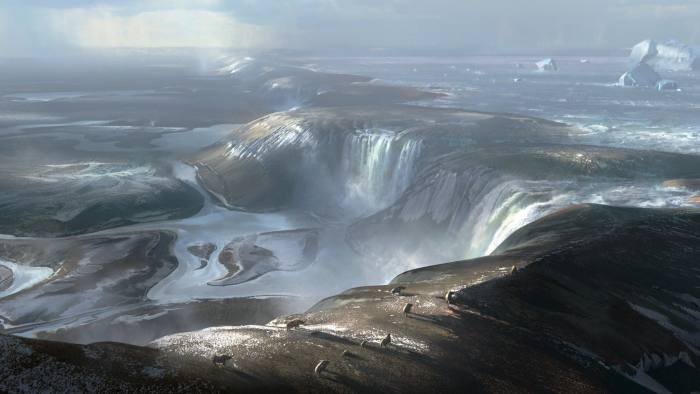
England in the background, Calais in the foreground, Europe about to be cut off (or something like that) - the scene 450,000 years ago just before the land bridge is breached.
A 3D bathymetric view looking north-east, showing the deep valley in the centre of the straits

Sunday, 2 April 2017

Daspletosaurus horneri - all you need to know

Face to face with Tyrannosaurus

There seems to be an insatiable appetite for knowledge about dinosaurs, especially T. rex. Here is some more from the Guardian and from Ars Technica talking about the same fossils. 

New research reveals that the face in tyrannosaurs was covered by an extensive mask of large, flat scales, and regions of armor-like skin on the snout, jaws, and ornamental horns. The large horn behind the eye was covered by the same material that makes human fingernails. The small bumps on the flat scales are Integumentary Sensory Organs (ISOs), as are seen in crocodiles, that provide extreme tactile sensitivity.

Friday, 31 March 2017

Next week 3rd to 9th April 2017


NEXT WEEKS EVENTS

27th March to 2nd April 2017
The following is an extract from Bristol Geology Calendar

More details can be found in the Calendar and on the web sites of the relevant Society or organisation.


Monday


Tuesday

18:00
 Geol Soc Lecture - Geology of the Avon Gorge
WhenTue, 4 April, 18:00 – 19:30
WherePugsley Lecture Theatre, Queens Building, University Walk, University of Bristol, BS8 1TR (map)
DescriptionBob Benton & Robert MacKean The talk will cover the geology of the Avon Gorge and focus upon the site investigation and rock stabilisation works which are critical to maintaining these imposing rock faces, which support Brunel’s iconic Clifton Suspension Bridge. Bob Benton will begin by describing past problems with the Avon Gorge rock faces and how these have led to the construction of the rock protection shelter over the A4 portway road. A review of the design and construction of the Rockfall Gallery will focus upon the requirement for rock anchoring and piled foundations. Robert MacKean will follow with a review of the geology of the Avon Gorge and discuss his involvement in recent investigations to evaluate the bridge abutments and foundations to the masonry towers.


Wednesday

13:30
 Teme Valley Geological Society Field Trip - Field trip to Southstone Rock and Brockhill Dyke in Teme Valley
WhenWed, 5 April, 13:30 – 16:30
WhereMartley Memorial Hall B4197 by Sports Ground (map)
DescriptionField trip to Southstone Rock and Brockhill Dyke in Teme Valley Prof. Ian Fairchild along with Leominster U3A and TVGS


Thursday

19:15
 Bath Geol Soc Lecture - Cosmic Dust
WhenThu, 6 April, 19:15 – 20:45
WhereBath Royal Literary and Scientific Institution, 16 Queen Square, Bath (map)
DescriptionCosmic Dust: Little Rocks from Space Dr. Matthew Genge, Senior Lecturer in Earth and Planetary Science, Faculty of Engineering, Department of Earth Science & Engineering, Imperial College, London University Extraterrestrial dust falls everywhere, it is on our homes and even on our clothes. These tiny particles come from asteroids and comets and tell us about the origins of our solar system. They are also the fastest dust particles on Earth and their fiery entry into our atmosphere leaves its mark on these objects.


Friday


Saturday
Bath Geol Soc Field Trip - Lulworth Cove and east to Mupe Bay, Dorset
WhenSaturday, 8 Apr 2017
WhereMeet at the Lulworth Cove car park at 10.30 am. (map)
DescriptionLulworth Cove and east to Mupe Bay, Dorset Leader: Maurice Tucker, University of Bristol and Bath Geological Society Lulworth Cove is a classic geological section of the Jurassic Coast World Heritage Site. Highlights include the spectacular bay itself, Stair Hole and the Fossil Forest. At Lulworth we will see the Upper Jurassic - Cretaceous strata: tectonics, stratigraphy, sedimentology and palaeontology. The Portland limestone and Purbeck beds show oolites, stromatolites, collapse breccias from evaporite dissolution, lacustrine limestones with bivalves and gastropods; the overlying Wealden consists of fluvial sandstones (some impregnated with oil) and palaeosoils. The Greensand and the Chalk at the back of the Bay contain fossil echinoids, bivalves and serpulids. There are also spectacular folds and faults, at Stair Hole in particular. There is much to see geologically around Lulworth Cove itself, but we will then walk along the Southwest Coastal Path to the east across the army firing range towards Mupe Bay. This 2-mile stretch is described as moderate and strenuous on the Jurassic Coast website and Mupe Bay as an "ideal spot for those who like their coastline wild, rugged and just a little bit dangerous!" ​ ​We will avoid the dangerous parts. There are some steps to climb to get out of Lulworth Cove. We hope at least to view the fossil forest from above, if access is still an issue following the cliff fall in 2015. Meet at the Lulworth Cove car park at 10.30 am. Post-code for the Lulworth car-park is BH20 5RQ. Price £7.50 for up to 6 hours (£9 >6 hrs). We will aim to be finished by 16.00. Strong footwear and packed lunch will be needed. Transport will be by private car. We will try to arrange lifts. Sign-up for the trip on the sheet at the February (2nd) or March (2nd) meeting of the Bath GS at BRLSI or contact bob_mustow@hotmail.com or 01249 443019 or mobile 07712 776117.

OUGS South West Field Trip - Kelly Mine and Great Rock Mine
WhenSaturday, 8 Apr 2017
WhereTeign Valley, Devon near Lustleigh (map)
DescriptionField Trip to Kelly Mine and Great Rock Mine Leaders: Nick Walter, Bruce Bolton Location: Teign Valley, Devon near Lustleigh Date: April 8th 2017 (Saturday) Type: Day Trip Summary: We will visit the restored surface workings at Kelly Mine and go underground at Great Rock Mine on Saturday 8th April 2017. More info: 2017_kelly.pdf Kelly mine formerly produced micaceous haematite, along with ten other mines in the Bovey triangle. The ore was used to produce 'battleship grey' paint for protecting steel structures from rusting. Visitors can trace the whole process, from mining the ore to the dispatch of the final product from the drying shed. The society holds an Open Day every two years, usually in September, the last one was held in September 2016. Take this opportunity of a private visit to see working stamps and processing machinery, waterwheels and the drying process, to go underground at Great Rock Mine. A wealth of information can be seen on the Kelly Mine Preservation Society website. http://www.kellymine.co.uk Please contact Tim Legood by email for more information.

South Gloucestershire Mines Research Group Outing
WhenSaturday, 8 Apr 2017
WhereTo be confirmed (map)
DescriptionCollieries of Bristol City Contact Steve Hillyard 0117 923 6595


Sunday


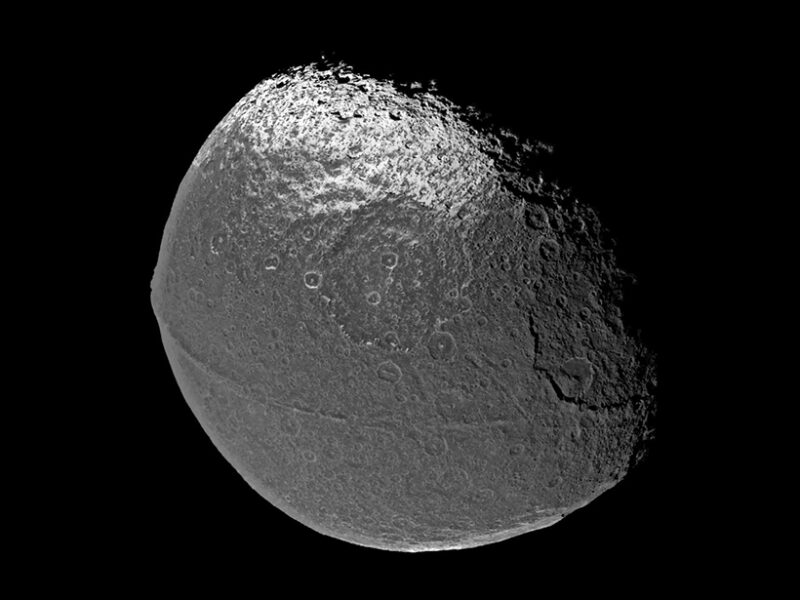
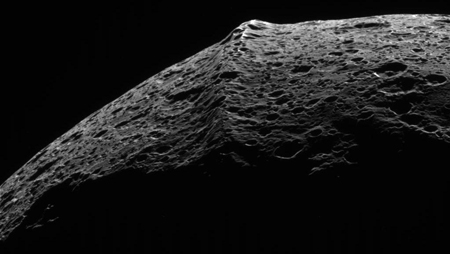
Odd shapes in space

The Ridge of Iapetus

The moon of Saturn, Iapetus, has a ridge running around it, at its equator. Why?
Did it come from outside - a slowly collapsing disc. Or from the inside - low density ice coming to the surface as rocky material moved downwards. 

All very interesting stuff. Read all about it HERE.


Friday, 24 March 2017

Next week 27th March to 2nd April 2017

Next Weeks EVENTS

27th March to 2nd April 2017
The following is an extract from Bristol Geology Calendar

More details can be found in the Calendar and on the web sites of the relevant Society or organisation.


Monday


Tuesday


Wednesday

19:30
 Bristol Nats Lecture - The Origins of Dolomite
WhenWed, 29 March, 19:30 – 20:30
WhereS H Reynolds lecture Theatre, Wills Memorial Building, University of Bristol, BS8 1RJ (map)
DescriptionProfessor Maurice Tucker: The Origins of Dolomite Dolomite is a common sedimentary rock – plenty in the Bristol district and South Wales in the Carboniferous and Triassic, but there is a problem in explaining its origin. Seawater is supersaturated with respect to dolomite but it does not precipitate there; dolomite appears to increase in abundance back through time, being especially common in the Precambrian; to dolomitise a limestone needs much Mg and through-flow of water – but how does that work? Dolomites are very important as reservoirs for oil and hosts of lead-zinc sulphide deposits, so understanding their origin and geometry is important. This talk will examine dolomites from around the world and up and down the geological column and discuss the hot topic as to whether microbes provide the answer. Members of WEGA and other local geological societies are invited to attend and bring proposals for field meetings for 2017.


Thursday


Friday


Saturday


Sunday


WEGA's NW USA Excursion

At Long Last - WEGA's NW USA Excursion Blog.


At last, 9 months in the making, the record of WEGA's excursion to the North West USA is published. Lots of geology, lots of maps, lots of photos find it HERE.


Gypsum sand dunes

Gypsum Sand Dunes - but the Grains are Too Big!

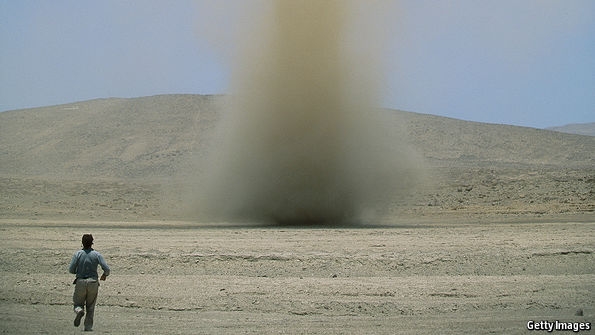
The Salar de Gorbea in the Atacama in Chile has gypsum sand dunes, like White Sands National Monument in New Mexico, USA. But, at White Sands the grains are small and wind blown, at the Salar they are up to 20cm! But they look wind blown! 

THIS ARTICLE in the Economist discusses how such huge crystals get to the dunes from gypsum producing ponds 5km away. Dust Devils? - perhaps.