The Silverpit - an Impact Structure
A correspondent brought THIS ARTICLE to my attention. It is based on THIS ACADEMIC PAPER.
I am getting up to speed with Artificial Intelligence (AI) and used ChatGPT to summarise the Science Daily article. I think it did a pretty good job.
(I am using this free, Bristol University, COURSE to further my knowledge of AI. It seems pretty good so far.)
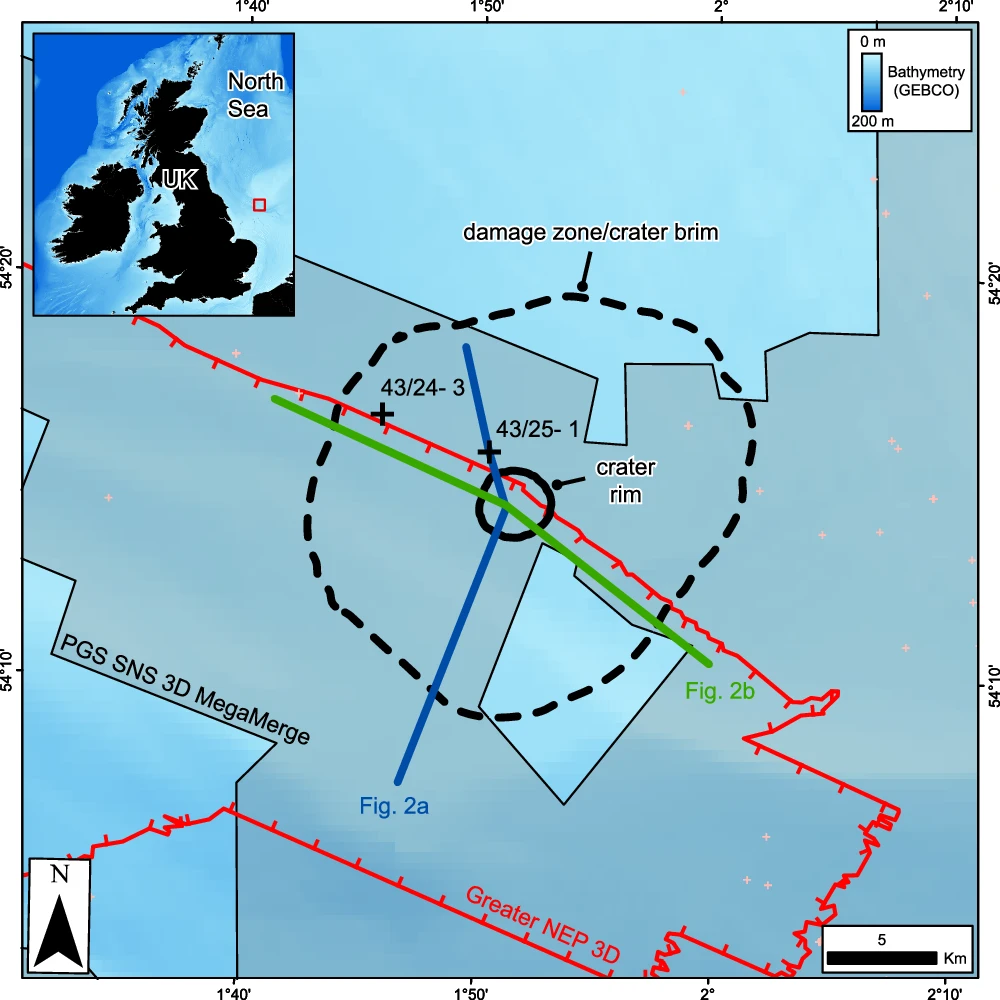
A recent study has provided strong new evidence that the Silverpit structure beneath the southern North Sea was created by an asteroid impact rather than by geological processes such as salt movement. The feature, first identified in seismic survey data collected during North Sea oil exploration in the early 2000s, had long been debated among geologists. Researchers from Heriot-Watt University have now used improved seismic imaging together with mineral analysis to support the impact interpretation.
According to the study, the impact occurred about 43–46 million years ago, during the Eocene epoch. Scientists estimate that the asteroid responsible was roughly 160 metres in diameter. When it struck the seabed, the collision released immense energy, excavating a large crater and ejecting vast quantities of rock and sediment into the surrounding environment. Seismic data reveal circular structures typical of impact craters, while rock samples show signs of shock metamorphism—microscopic changes in mineral structure produced by extremely high pressures, which are characteristic of meteorite impacts.
The consequences of the collision would have been dramatic. The impact likely generated a massive tsunami, possibly exceeding 100 metres in height, that would have spread across the ancient North Sea basin. Such a wave could have flooded nearby coastlines and significantly altered local landscapes. The event would also have produced a large plume of debris, water, and vapour thrown high into the atmosphere.
For years, many scientists suggested the Silverpit feature might instead be the result of salt tectonics, a process in which underground salt layers move and distort surrounding sediments. The new combination of geophysical and mineralogical evidence, however, provides the clearest support yet for the impact hypothesis.
By confirming the origin of the Silverpit crater, the research adds another entry to the record of asteroid impacts on Earth. It also highlights that significant ocean impacts capable of generating large tsunamis have occurred within relatively recent geological time.