Saturday, 16 May 2026

The End of the Dinosaurs

The End of the Dinosaurs

THIS ARTICLE in The Conversation gives a minute by minute account of what happened when the asteroid struck. And it tells how the impact led to the death of the dinosaurs and the rise of the mammals. And it is co-written by Mike Benton and Monica Grady, so it is most probably correct! (At least at the time of writing.)

The article is well worth reading. If you are content with a summary, below is Google Gemini's.
--------------------
The Immediate Aftermath (T+0 to 5 Minutes)
The asteroid, traveling faster than the speed of sound, hit the Yucatán Peninsula with the force of billions of Hiroshima bombs. If you were within 1,000 miles, you didn't hear the impact; you were vaporized by the thermal radiation before the sound waves could even reach you.

Within minutes, supersonic winds—stronger than any Category 5 hurricane—flattened entire forests. The atmosphere briefly turned into an oven, reaching temperatures of over 200°C (400°F).

The Environmental Collapse (T+1 Hour to 1 Week)
As the crust rebounded from the impact, it formed a crater 30 kilometres deep, launching molten rock into space. This material rained back down as "impact spherules," igniting global wildfires.

Then came the "stinky" phase. The asteroid hit a region rich in sulphur, blasting massive amounts of it into the sky. Combined with the smoke from burning forests and decaying carcasses, the entire planet likely smelled like rotting vegetables and acrid smoke.

The Long Winter
The soot and sulphur created a global shroud, blocking the sun for years. Photosynthesis stopped. The oceans became acidic from nitrogen oxides, and the planet plunged into a deep freeze.

It is a humbling reminder of our planet’s fragility. While this Armageddon wiped out the giants, it left a tiny opening for small, burrowing mammals—our ancestors—to survive. Without that terrible Tuesday, humans might never have had the chance to walk the Earth.
-----------------------


A Visualisation by Google Gemini
This visualization focuses on the global environmental shift. The sky is no longer blue but choked with thick, black soot and sulphate aerosols. This dense layer blocks the sun, plunging the planet into darkness. The illustration visualizes the "smell" described in the research by depicting the air itself as a visual fog of acid rain, illuminated by the low, dim, hellish glow of widespread global wildfires.

Saturday, 9 May 2026

Volcanic Items of Interest

 Volcanic Items of Interest

Various items have come to my notice lately so here they are in no particular order.
  • Can volcanic eruptions be forecast, like the weather? The origin of this was THIS ARTICLE and the answer is no but we are getting better at it. What controls volcanism is not easily visible and is not active all the time, unlike weather which is visible and happening constantly. The article covers many aspects of volcanism and has some spectacular photographs.

  • Is the Campi Flegrei in Naples going to erupt? The Campi Flegrei to the west of downtown Naples is used to low grade volcanic activity - earthquake swarms, ground uplift and subsidence - there is a state of emergency but not yet at a level which would trigger mass evacuation. 

    Earthquakes detected in Campi Flegrei area, Italy from February 15 - 18, 2025. Credit: INGV


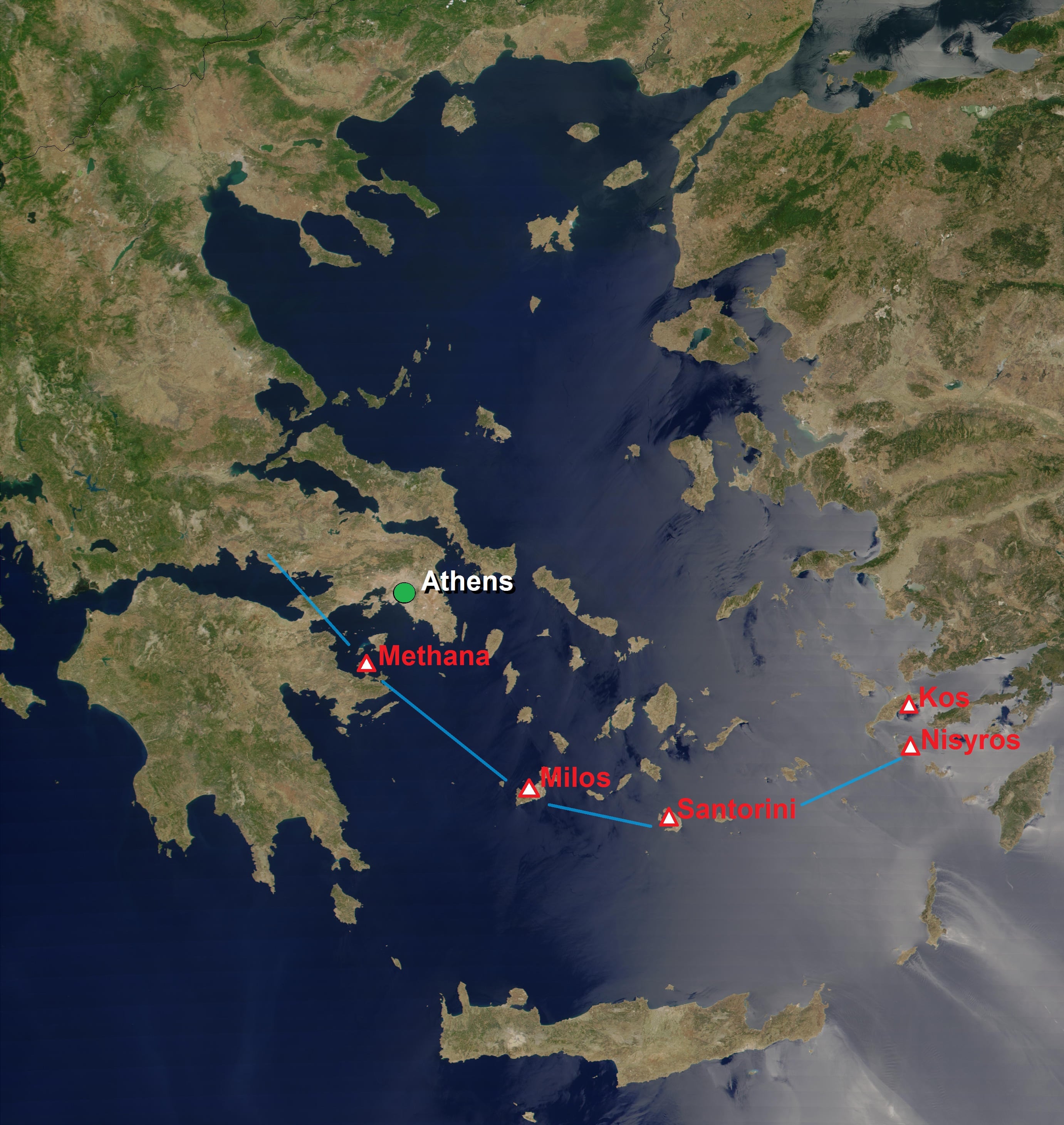
  • Are Extinct Volcanoes actually Dormant? This comes from THIS ARTICLE. And the evidence for this comes from the "extinct" Methana volcano not far from Athens. It seems that zircon crystals formed throughout the volcanoes history, including during long periods of quiescence. Are they still forming now?


    The Southern Aegean Volcanic Arc, showing Methana on the left and Santorini at the bottom. (Giorgostr/Wikimedia Commons)


  • Lots of magma under Tuscany. Tuscany is not known for volcanism but recent seismological studies have indicate that Yellowstone volumes of magma lie 10km under the surface. The academic paper detailing this is HERE

Saturday, 2 May 2026

Would You be Scared of this Giant Octopus?

 Would You be Scared of this Giant Octopus?

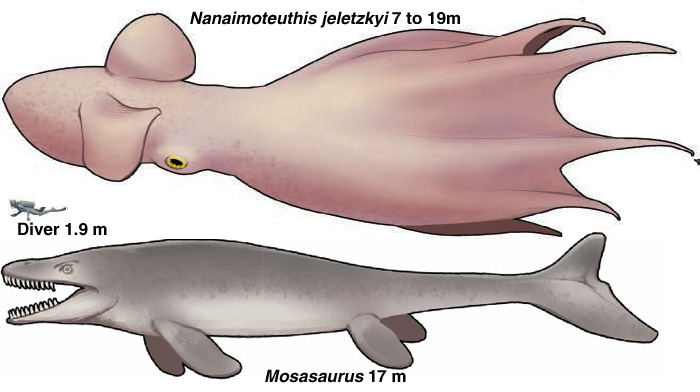
Generally octopuses don't fossilise - they are essentially bags of water. But their beaks are preserved and someone has found some big ones in Cretaceous rocks. And using present day beak sizes and octopus sizes has come to the conclusion that their beaks belonged to an octopus 7 to 19 metres in length!


Cretaceous marine predators (at maximum estimated size) with a scuba diver for scale. Credit: After Ikegami et al. Fig. 4, and Jacobs 2026.

Was the octopus a top predator or was it an extra large food source for a Mosasaurus? It is certainly a very good focus for speculation. Proving anything might be a difficult task.

You can read all about it HERE, based on THIS PAPER

Some New but Old Cambrian Fossils

 Some New (but Old) Cambrian Fossils

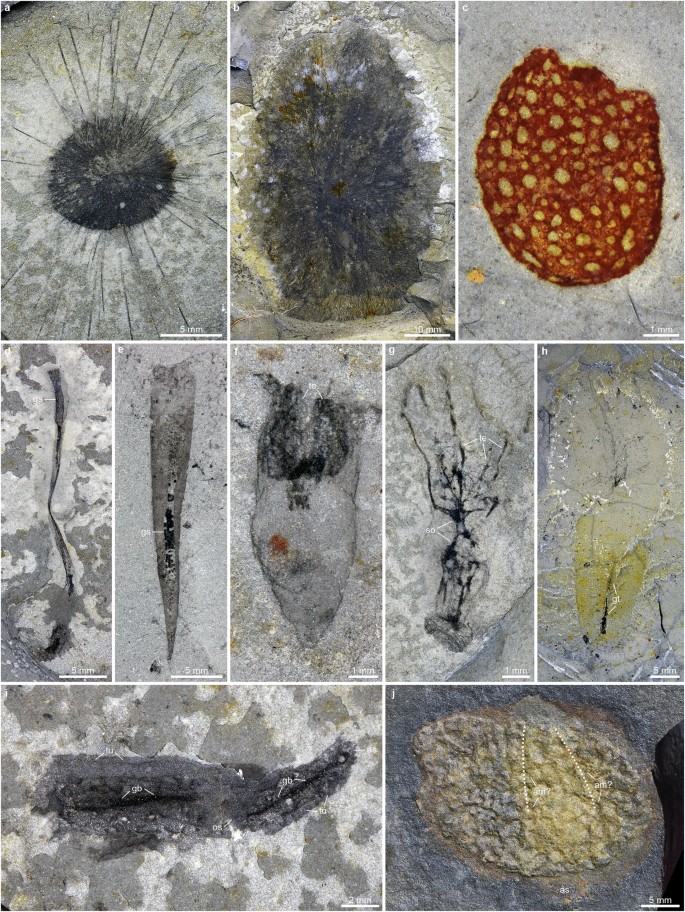
A correspondent sent me THIS LINK (but I had spotted it my self!). It concerns a recently discovered Lagerstätte in Southern China, called the Huayuan biota.

It has an added importance as being just after the first mass extinction of the Phanerozoic. It contains some old favourites from the Burgess Shale but many new species have been identified.

The find is of importance for many reasons but for me it is important for the wonderful photographs of the beasties. The source academic paper is HERE


non-bilaterian metazoans and deuterostomes from the Huayuan biota