Saturday, 11 March 2017

Next week 13th to 19th March 2017

NEXT WEEKS EVENTS

13th to 19th March 2017
The following is an extract from Bristol Geology Calendar

More details can be found in the Calendar and on the web sites of the relevant Society or organisation.


Monday


Tuesday

19:30
 WEGA Lecture
WhenTue, 14 March, 19:30 – 20:30
WhereEarth Sciences Lecture Theatre, Wills Memorial Building, Park street, Bristol (map)
DescriptionProf. Paul Pearson, University of Cardiff. 'Investigation of Earth's climate history using isotopes in foraminifera'


Wednesday


Thursday

19:30
 Thornbury Geology Group meeting
WhenThu, 16 March, 19:30 – 20:30
Description Thornbury Geology Group, The Chantry, Thornbury, 7.30pm, contact 01454 416882 The group is is an offshoot of Thornbury and District Museum and we welcome new members. Previous geological knowledge can be helpful but is not necessary as members are very willing to share their own knowledge with anyone keen to learn more about Earth Science. The group is loosely following a pre-recorded lecture series which is supplemented by use of other material and geological specimens. On occasions a guest speaker will talk on their specialist topic. Costs are met from attending members' monthly contributions and the group does not have membership subscriptions or a committee


Friday


Saturday

10:30
 South Wales Geologists' Association - Lecture
WhenSat, 18 March, 10:30 – 12:00
WhereLectures at University of Wales Swansea are held in the department of Geography in the Wallace building. We meet on the landing area inside the main entrance to the building for refreshments with lectures in the main lecture theatre. (map)
DescriptionSaturday 18th March: (Swansea): AGM: Recognition and interpretation of sea-level changes in the Marros Group (Namurian) of South Wales. Dr Gareth George (Greenwich)

13:30
 Gravestone Geology
WhenSat, 18 March, 13:30 – 14:30
WhereHeadington Municipal Cemetery, Dunstan Road, Headington, Oxford OX3 9BY (map)
DescriptionThe wide range of rock types used for gravestones means that cemeteries can be geological treasure-troves. For geologists – whether amateur, student or professional – almost any urban cemetery provides a valuable opportunity to carry out scientific field work at leisure, right on the doorstep and at no cost. From minerals to fossils, to sedimentary and flow structures and exotic metamorphic rocks, there's a lot to see. Join geologists Nina Morgan and Philip Powell on guided geological walks through three different burial grounds in Oxford during British Science Week. You'll never look at cemeteries in the same way again! The walks last around an hour. All are free to attend, no need to book – just turn up.


Sunday

OUGS Severnside - Excursion
WhenSunday, 19 Mar 2017
DescriptionEvent: Waterfall Country, Brecon Beacons Leader: Gareth George Location: South Wales Date: March 19th 2017 (Sunday) Type: Day Trip Summary: The itinerary will include: Penwyllt, Henrhyd Falls, Clun Gwyn Falls, Sgwyd Gwladys, River Nedd Fechan More info: Copies of both Gareth's books (Sedimentology in South Wales & A field guide to South Wales) will be available for sale on the day for a discounted price. Contact #1: Janet Hiscott [janethiscott@netscape.net] Contact #2: Janet Hiscott [janethiscott@netscape.net] Booking Form: Please contact the organiser of this event for further information. Itinerary and Risk Assessment: Please contact the organiser of this event for the Itinerary and Risk Assessment.

13:30
 gravestone Geology
WhenSun, 19 March, 13:30 – 14:30
WhereHolywell Cemetery, behind St Cross Church, Longwall Street, Oxford OX1 3TP (map)
DescriptionThe wide range of rock types used for gravestones means that cemeteries can be geological treasure-troves. For geologists – whether amateur, student or professional – almost any urban cemetery provides a valuable opportunity to carry out scientific field work at leisure, right on the doorstep and at no cost. From minerals to fossils, to sedimentary and flow structures and exotic metamorphic rocks, there's a lot to see. Join geologists Nina Morgan and Philip Powell on guided geological walks through three different burial grounds in Oxford during British Science Week. You'll never look at cemeteries in the same way again! The walks last around an hour. All are free to attend, no need to book – just turn up.


Gravestone Geology

Celebrate Science in a Cemetery

The Geological Society of London blog advertises geological walks in Oxford graveyards. We are too late for the first but the rest look equally interesting.

Gravestones in Holywell Cemetery, Oxford c. Mike Tomlinson


The wide range of rock types used for gravestones means that cemeteries can be geological treasure-troves. For geologists – whether amateur, student or professional – almost any urban cemetery provides a valuable opportunity to carry out scientific field work at leisure, right on the doorstep and at no cost. From minerals to fossils, to sedimentary and flow structures and exotic metamorphic rocks, there's a lot to see.
Join geologists Nina Morgan and Philip Powell on guided geological walks through three different burial grounds in Oxford during British Science Week. You'll never look at cemeteries in the same way again!
The walks last around an hour. All are free to attend, no need to book – just turn up.
Start times and dates:
Saturday 11 March 1:30: Holywell Cemetery, behind St Cross Church, Longwall Street, Oxford OX1 3TP
Sunday 12 March, 1:30: St Sepulchre's Cemetery, Walton Street, Oxford OX1 2HD (near Juxton Street)
Saturday 18 March 1:30 Headington Municipal Cemetery, Dunstan Road, Headington, Oxford OX3 9BY
Sunday 19 March 1:30 Holywell Cemetery, behind St Cross Church, Longwall Street, Oxford OX1 3TP

The Oxford burial grounds are featured in The Geology of Oxford Gravestones by Nina Morgan and Philip Powell.  Copies will be available to examine and buy after each walk.

Eyes before Legs

Eyes before Legs?

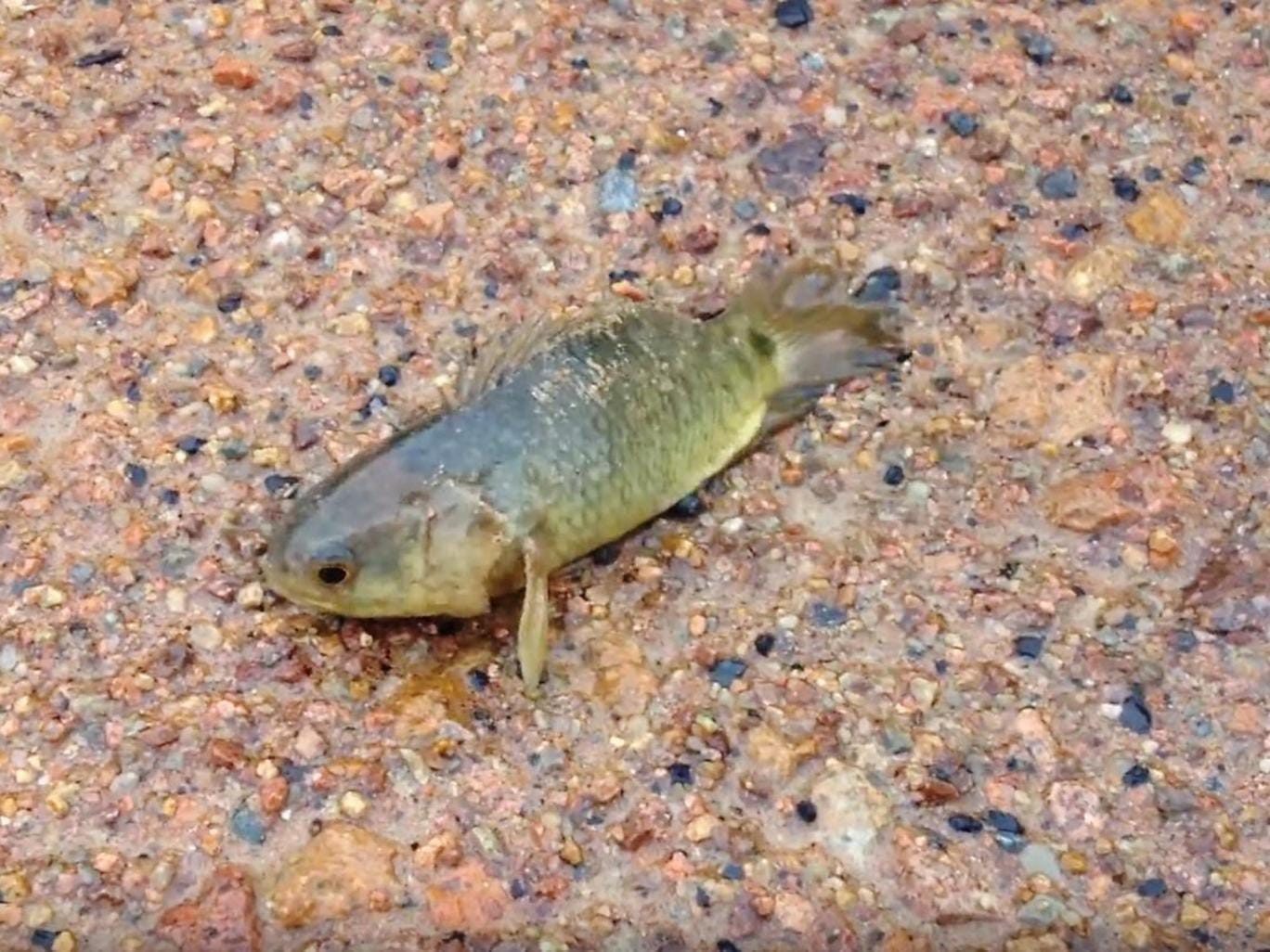
This article suggests that animals moved onto land because they liked what the saw there and this happened before they had "legs" to get about easily on land.

Sounds like advertising! Promote the desire even if the customer does not have the means!

Anyway it is very interesting.
A climbing perch, which has lungs as well as gills, can survive on land for up to six days youtube


Friday, 3 March 2017

Next week 6th to 12th March 2017

NEXT WEEKS EVENTS

6th to 12th March 2017
The following is an extract from Bristol Geology Calendar

More details can be found in the Calendar and on the web sites of the relevant Society or organisation.


Monday


Tuesday


Wednesday


Thursday

19:30
 Dave Green's microscope course
WhenThu, 9 March, 19:30 – 21:30
WhereThe Chantry, Thornbury. (map)
DescriptionRocks and Minerals under the Microscope.  This 10 week course aims to introduce you to the identification and description of rocks and their component minerals under the petrological microscope. This is a practical course, each participant will be provided with a microscope and a set of thin sections of rocks, and will work through a course at their own pace. Held at The Chantry, Thornbury. First meeting 7.30 – 9.30, Thurs 12th January until March 23rd (not Thurs 16th Feb) in the Buckingham Room. Max. numbers 20, “first come, first served” due to number of slide sets. Cost £75


Friday

19:00
 Cheltenham Mineral and Geological Society
WhenFri, 10 March, 19:00 – 21:00
WhereShurdington at The Century Hall (map)
DescriptionAGM and Annual Competition


Saturday


Sunday


10:00
 OUGS SW Field Trip
WhenSun, 12 March, 10:00 – 13:00
WhereGoodrington, Paignton TQ4, UK (map)
DescriptionOUGS SW branch have an ‘Introduction to Geology' field trip running to Goodrington on Sunday 12th March. The focus of the day will be on understanding the origins, lithology and structures in a range of different sedimentary rocks from Roundham Head to Saltern Cove rather than their stratigraphical relationships, it will be focused on beginners. It will include scrambling over wet rocks at low tide so suitable footwear is vital, preferably boots, total distance about 4-5 miles. The return is by steep cliff steps and then the coastal path. Contact Rich Blagden at south.west@ougs.org for details concerning time and exact place.


Post-Modern Mineralogy?

Human Formed Minerals

A recent paper, reported on HERE, suggests that human activity has led to a new age in mineral formation.

Examples are chalconatronite, a rare copper mineral forming blue crystals on ancient Egyptian Bronze; andersonite, forms green to yellow crystals on the walls of some mines, when uranium ore is exposed for the first time to water during the excavation of the tunnels.

My favourite is fordite, only found in old Detroit auto-painting facilities and formed by the deposition of layers of enamel paint.

My least favourite is plastiglomerate (actually a rock type, not a mineral) formed by burning plastic rubbish along the coasts of Hawaii. The melting plastic incorporates the pebbles of lava-rocks found on the beach, forming a never before seen type of conglomerate.

I suspect these new minerals are not very pretty as the article is illustrated by pictures of "traditional" minerals.

Thursday, 2 March 2017

Worlds Oldest Fossils


How the Worlds Oldest Fossils were Discovered

(you could add "perhaps" and "possibly" to the above as the mood takes you!)


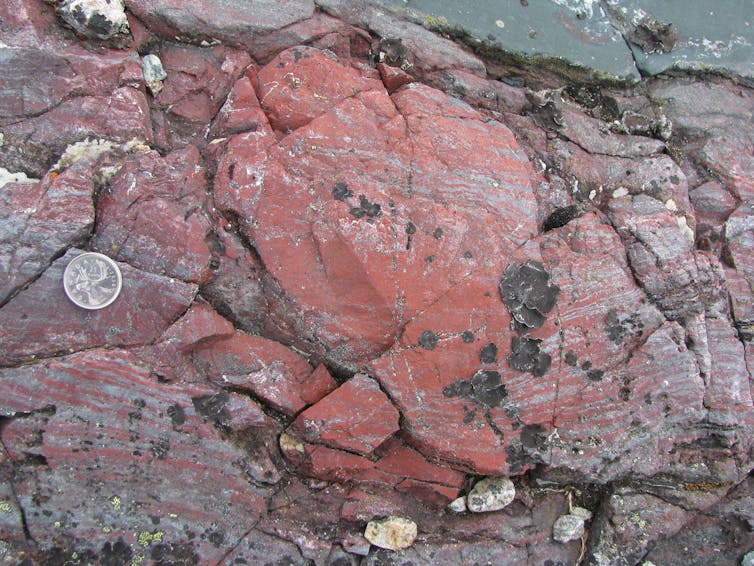
HERE is a report on how the fossils were found and examined.

And we have some photos.

Rocks created from hydrothermal vent precipitates on the seafloor. Dominic Papineau

Filaments attached to a clump of iron. Matthew Dodd

Introduction to Geology - OUGS

OUGS Running "Introduction to Geology" Field Trip


OUGS SW branch have an ‘Introduction to Geology' field trip running at Goodrington, Paignton, on Sunday 12th March.

The focus of the day will be on understanding the origins, lithology and structures in a range of different sedimentary rocks from Roundham Head to Saltern Cove rather than their stratigraphical relationships. It will be focused on beginners. There will be scrambling over wet rocks at low tide so suitable footwear is vital, preferably boots, total distance about 4-5 miles. The return is by steep cliff steps and then the coastal path.

Further details can be had from Rich Blagden at THIS email address.