Saturday, 1 February 2020

Earth Heritage Bumper Bundle!

Earth Heritage - No. 49, 50, 51

A correspondent has brought these to my notice. They are full of fascinating stuff. 


Or look at them on the blog.


----------------------------------------


-------------------------------------------------


DOWN TO EARTH EXTRA - February 2020


DOWN TO EARTH EXTRA - JANUARY 2020


You can get the latest edition HERE


Saturday, 25 January 2020

27th January to 2nd February 2020


NEXT WEEKS EVENTS

27TH JANUARy to 2nd february 2020


THE FOLLOWING IS AN EXTRACT FROM BRISTOL AND WEST COUNTRY GEOLOGY CALENDARS

MORE DETAILS CAN BE FOUND IN THE BRISTOL AND THE WEST COUNTRY CALENDARS AND ON THE WEB SITES OF THE RELEVANT SOCIETY OR ORGANISATION.


MONDAY 27TH
Geostudies Lecture Course - Germany
When
Mon, 27 January, 19:30 – 21:30
Where
Wynstones School, Stroud Road, Whaddon, Gloucester (map)
Description
The Geology of Germany 

 Monday 13th for 10 weeks (not 17th Feb) until 23rd  March. Held at Wynstones School, Stroud Road, Whaddon, Gloucester from 7.30 - 9.30pm on Mondays. 

Like Britain, Germany consists of a number of exotic Terranes, derived from different continents and amalgamated together by plate tectonic collisions. Northern Germany is part of Avalonia, which amalgamated with the East European Craton (Baltica) along the Tornquist suture in the east. A great deal of this area is plastered by thick Quaternary glacial sediments. 

Central Germany is part of Armorica, which collided with the north during the Variscan orogeny. There is, in places, thick Mesozoic unconformable cover. The extreme south is part of the Alpine orogeny, but its effects were transmitted northwards to affect and reactivate older structures. There was extensive volcanic activity during the Tertiary, and some famous asteroid impact sites. 

Cost £75

Tuesday 28th


Wednesday 29th

Bristol Nats AGM & Members Evening
When
Wed, 29 January, 19:30 – 21:30
Where
Room 1.5 Wills Memorial Building, University of Bristol (map)
Description
The Geology Section’s Annual General meeting will consider the report on Section activities during 2019 and appoint the officers and committee to serve for 2020. 

This involves the election of a President, Secretary, Field Secretary and other committee members if appropriate. The post of President is currently vacant. Anyone interested in taking on these positions is asked to contact the Section Secretary who will not be in any way upset if another person wishes to take on the Secretary or Field Secretary roles. Alternatively nominations may be made to the Society Secretary preferably by 15 January.

 Please consider if you might be able to help organize our programme of talks and walks by suggesting Speakers or Leaders. 

The business section of the meeting will be followed by presentations or short talks by members of the Section. Displays of rocks and fossils by members will be especially welcome as will short talks on any aspect of geology. This will be an occasion for members to SOCIALISE and really get to know each other so please do come along.

thursday 30th

Geostudies Lecture - Uniformitarianism
When
Thu, 30 January, 19:30 – 21:30
Where
The Chantry, Thornbury (map)
Description

The Limits of Uniformitarianism.


The science of geology is heavily dependent on the principle of uniformitarianism – the idea  that geological conditions and processes have remained substantially unchanged through geological time, meaning that we can interpret the past on the basis of our understanding of the geological present. But how accurate is this principle? To what extent were conditions and processes different in the past? Are present conditions and processes typical? How well do we understand present processes? And there are also spatial features to consider; A casual examination of a modern sedimentary or volcanic environment reveals rapid and wide-ranging changes in facies over a small area. Our evidence of past environments is largely based on small, possibly unrepresentative, exposures of tiny fractions of those past environments. Are we justified in using evidence from the past to interpret the present and future, such as climate change?  Held at The Chantry, Thornbury, in the Hanover Room.  First meeting 7.30 – 9.30, Thurs 16th  January until April 2nd  (not Thurs 20th Feb or 19th March). Cost £75


Programme

What do we mean by Uniformitarianism? Origin of the term and the historical context in which it arose and developed as a counter to “Old” Catastrophism.

What are the main problems with Uniformitarianism? The rise of “New” Catastrophism in the later part of the 20th century. Problems of direction, cyclicity, punctuation, gradualism in the following fields of geology:

Uniformitarianism and sedimentation. Have conditions changed over geological time? How representative in terms of coverage and completeness is the sedimentary record?

Uniformitarianism and volcanicity, earthquakes, intrusion and landslides

Uniformitarianism and the solar system – external processes affecting earth geology

Uniformitarianism and major environmental change (such as climate and sea level changes)

Uniformitarianism, evolution and mass extinction  

Uniformitarianism and tectonics – was plate tectonics a relatively young development? Is the Wilson (supercontinent) Cycle real?

Geomorphology and Uniformitarianism

Is the present the key to the past? (or in reverse?)


friday 31st


saturday 1st february

OUGS South West - AGM
When
Saturday, 1 Feb 2020
Where
Hannafore Point Hotel, Hannafore Road, West Looe, Cornwall PL13 2DG (map)
Description

Event: South West Branch Day of Talks and AGM
Venue: Hannafore Point Hotel, Hannafore Road, West Looe, Cornwall PL13 2DG
Date: February 1st 2020 (Saturday)
Type: Branch Annual General Meeting
Summary: Programme details below.
Details of Sunday Field Trip T.B.A.
cost - £20 for members, £25 for non-members to include teas, coffees and a light lunch.
More info: 


A discount has been arranged for delegates who wish to stay at the hotel. Please see Booking form. 

SWOUGS Day of Talks and AGM

Saturday February 1st, 2020

Hannafore Point Hotel, Looe, Cornwall PL13 2DG

www.hannaforepointhotel.com Tel 01503 263 273

Programme

1000 Welcome

1015 Dr Doug Robinson

The making of the Mendips

– a 200 million-year, 7,500 km journey across the planet.

1100 break

1115 Dr Irene Manzella, University of Plymouth

Using small scale laboratory experiments to understand volcanic and landslide hazards.

1215 Prof John Mather

The Whetstone Industry of the Blackdown Hills, Somerset.

1300 Lunch

1400 Dr Camille Dusséaux, University of Plymouth

300 million-year-old rainwater gives clues about the altitude of the Variscan Mountain Chain during the Carboniferous.

1515 SWOUGS AGM

1. Reports

2. Accounts

3. Election of Committee

4. AOB

5. Date and time of next AGM

On Sunday the 2nd February there will be a field trip led by Calum Beeson of Penryn Campus, details and timings to come later.

Cost, £20 for members of OUGS, £25 for visitors, to include Teas, Coffees and a light lunch.


sunday 2nd

OUGS South West - Field Trip
When
Sunday, 2 Feb 2020
Where
Cawsand Bay, Torpoint PL10, UK (map)
Description

Event: Branch AGM Field Trip to SSSI at Kingsand and Sandway Cellars
Leader: Calum Beeson
Location: Cawsand Bay, Cornwall
Date: February 2nd 2020 (Sunday)
Type: Field Trip (Day)
Summary: Details TBA
More info: 
Kingsand lies on the shores of Cawsand Bay, with the South West Coast Path running through the village. The village coast, as well as the coast 1 km to the east, forms the Kingsand to Sandway Point SSSI (Site of Special Scientific Interest), which shows examples of extensive Early Permian volcanicity.

The World's Oldest Meteorite Crater

The World's Oldest Meteorite Crater

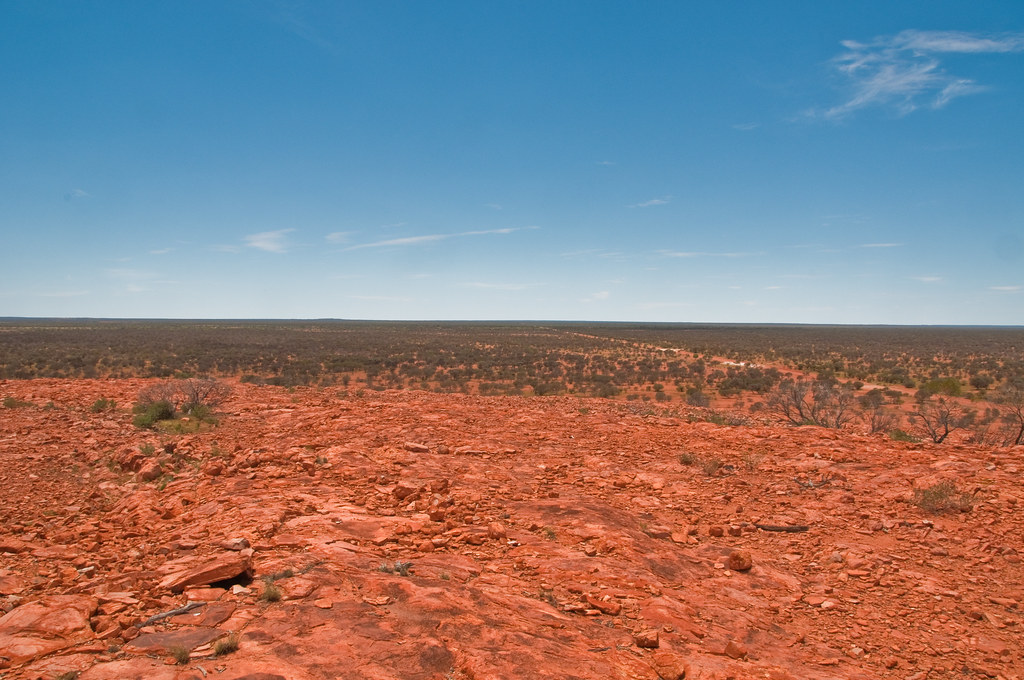
My attention was drawn to this WEB PAGE (scroll down to the 21st January entry) as Nature wanted to use a photograph of mine to illustrate it. I, of course, said yes. 

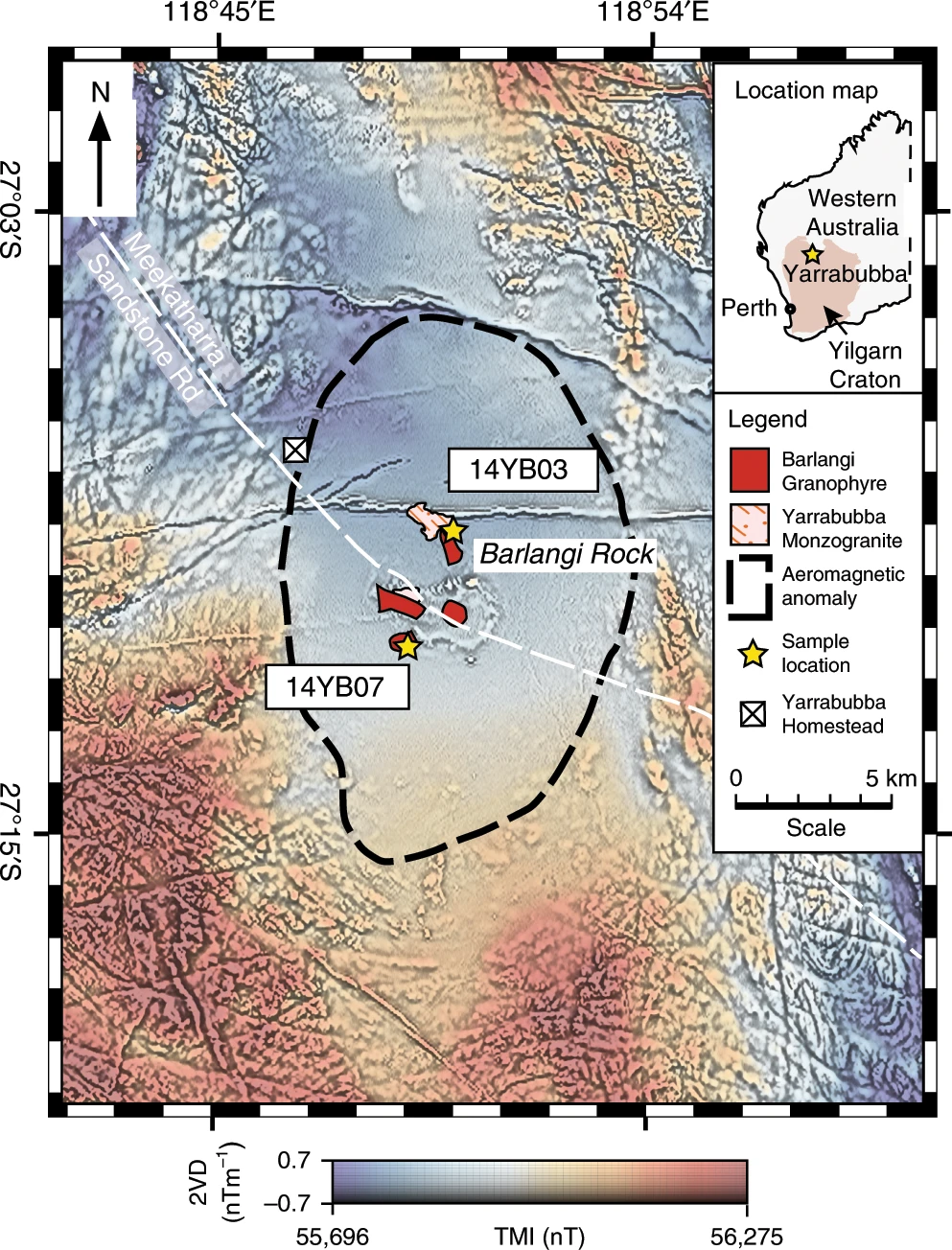
We were at Barlangi Rock in January 2011 with a couple of geologist friends from University. In particular, John Bunting had been instrumental in bringing the site to the notice of the meteorite impact community and I was keen to see what he had found. You can see all my photos HERE. 

The first link is an introduction to THIS PAPER. This gives evidence that the impact has an age of 2229 ± 5 Ma. This is older than the Vredefort impact in South Africa and is the oldest impact found so far.

John's interest in the area was aroused by an observation made many years ago that shocked quartz had been seen in thin sections from the area. Also the (lack of) aeromagnetics of the area - see the figure below.


 The paper speculates that the area was covered by ice at the time of impact and the vaporisation of this may have influenced climate change. But in which direction the authors refuse to hazard a guess!


Barlangi (5 of 19)
On Barlangi Rock with the Meekatharra - Sandstone Highway on the right

Thursday, 23 January 2020

Somerset Building Stones

Somerset Building Stones

A corespondent has brought THIS WEB PAGE to my notice. And I am glad they did! It is a wonderful resource recording the traditional building stones used in Somerset.

So far the authors, Garry Dawson and Peter Wright, have covered Taunton Dene and the Quantock Hills east to the River Parrett and are working on West Somerset and South Somerset west of the River Parrett. One hopes the rest will be covered before long! 

The extent of the survey by August 2019

The amount of detail which can be accessed from the page is fantastic - how about a spreadsheet with 40 columns and 2580 rows!!!

The web page is part of the web site of the South West Heritage Trust and that too is well worth exploring. I found the section on films to be particularly interesting.

Saturday, 18 January 2020

20th to 26th January 2020


NEXT WEEKS EVENTS

20th to 26th January 2020


THE FOLLOWING IS AN EXTRACT FROM BRISTOL AND WEST COUNTRY GEOLOGY CALENDARS

MORE DETAILS CAN BE FOUND IN THE BRISTOL AND THE WEST COUNTRY CALENDARS AND ON THE WEB SITES OF THE RELEVANT SOCIETY OR ORGANISATION.


MONDAY 20TH

Geostudies Lecture Course - Germany
When
Mon, 20 January, 19:30 – 21:30
Where
Wynstones School, Stroud Road, Whaddon, Gloucester (map)
Description
The Geology of Germany 

 Monday 13th for 10 weeks (not 17th Feb) until 23rd  March. Held at Wynstones School, Stroud Road, Whaddon, Gloucester from 7.30 - 9.30pm on Mondays. 

Like Britain, Germany consists of a number of exotic Terranes, derived from different continents and amalgamated together by plate tectonic collisions. Northern Germany is part of Avalonia, which amalgamated with the East European Craton (Baltica) along the Tornquist suture in the east. A great deal of this area is plastered by thick Quaternary glacial sediments. 

Central Germany is part of Armorica, which collided with the north during the Variscan orogeny. There is, in places, thick Mesozoic unconformable cover. The extreme south is part of the Alpine orogeny, but its effects were transmitted northwards to affect and reactivate older structures. There was extensive volcanic activity during the Tertiary, and some famous asteroid impact sites. 

Cost £75
----------------------------------

Teme Valley G S - Lecture
When
Mon, 20 January, 19:30 – 21:00
Where
Martley Memorial Hall B4197 by Sports Ground (map)
Description
Prof. Ian Fairchild, Caves, Caves’ Atmospheres and Caves’ Climates  

tuesday 21st

Geol Soc Western - Early Careers Award and AGM
When
Tuesday, 21 Jan 2020

wednesday 22nd


thursday 23rd

Geostudies Lecture - Uniformitarianism
When
Thu, 23 January, 19:30 – 21:30
Where
The Chantry, Thornbury (map)
Description

The Limits of Uniformitarianism.


The science of geology is heavily dependent on the principle of uniformitarianism – the idea  that geological conditions and processes have remained substantially unchanged through geological time, meaning that we can interpret the past on the basis of our understanding of the geological present. But how accurate is this principle? To what extent were conditions and processes different in the past? Are present conditions and processes typical? How well do we understand present processes? And there are also spatial features to consider; A casual examination of a modern sedimentary or volcanic environment reveals rapid and wide-ranging changes in facies over a small area. Our evidence of past environments is largely based on small, possibly unrepresentative, exposures of tiny fractions of those past environments. Are we justified in using evidence from the past to interpret the present and future, such as climate change?  Held at The Chantry, Thornbury, in the Hanover Room.  First meeting 7.30 – 9.30, Thurs 16th  January until April 2nd  (not Thurs 20th Feb or 19th March). Cost £75


Programme

What do we mean by Uniformitarianism? Origin of the term and the historical context in which it arose and developed as a counter to “Old” Catastrophism.

What are the main problems with Uniformitarianism? The rise of “New” Catastrophism in the later part of the 20th century. Problems of direction, cyclicity, punctuation, gradualism in the following fields of geology:

Uniformitarianism and sedimentation. Have conditions changed over geological time? How representative in terms of coverage and completeness is the sedimentary record?

Uniformitarianism and volcanicity, earthquakes, intrusion and landslides

Uniformitarianism and the solar system – external processes affecting earth geology

Uniformitarianism and major environmental change (such as climate and sea level changes)

Uniformitarianism, evolution and mass extinction  

Uniformitarianism and tectonics – was plate tectonics a relatively young development? Is the Wilson (supercontinent) Cycle real?

Geomorphology and Uniformitarianism

Is the present the key to the past? (or in reverse?)


friday 24th


saturday 25th

OUGS Wessex - AGM and Day of Talks
When
Sat, 25 January, 10:10 – 15:45
Where
The D’Urberville Centre, Collier's Ln, Wool, Wareham BH20 6DL, UK (map)
Description
Event: Wessex Branch AGM and Day of Talks
Venue: D'urberville Centre, Wool, Dorset
Date: January 25th 2020 (Saturday)
Type: Branch Annual General Meeting
Summary: A sociable day with three talks on the theme of 'hidden worlds', an excellent lunch, and a brisk AGM.
More info:
For more information on the day's events, see AGM_2020_flyer.pdf 

Programme:

10.10 am  Registration (with tea and coffee)

10.30 am  Dr Laura Newsome (Camborne School of Mines) 'Microbes and ore deposits'

11.30 am  Stacy Phillips (Open University) 'How to make a mountain: Melting the heart of the Himalaya'

12.40 pm  Buffet lunch

1.30 pm    AGM (Agenda published in Members' Information section)

2.20 pm    Stacey Felgate (National Oceanographic Centre) 'Where has all the carbon gone?'

3.45 pm  Close

The charge for the talks, refreshments and lunch is £8 per person. 
--------------------------------

South Wales G A - Lecture
When
Sat, 25 January, 11:00 – 12:30
Where
Lectures at University of Wales Swansea are held in the department of Geography in the Wallace building. We meet on the landing area inside the main entrance to the building for refreshments with lectures in the main lecture theatre. (map)
Description
To be confirmed

sunday 26th

Free Geology Course

Free Geology Course

A correspondent has brought THIS to my notice. It is a course on "Extreme Geological Events" taught by people from Cardiff University's Geology Department. From the bits I have watched it looks pretty good. 

You can get all the details at the web site where you can sign up for the course - and it starts on the 27th January!