Friday, 3 November 2017

Richard Fortey

Richmond Lectures: Richard Fortey

I have been asked to publicise this:

***This event is being hosted in collaboration with DinoSoc***

Anson Room, Students' Union
 
Richard Fortey tells of the adventures and misadventures he experienced during his working life at The Natural History Museum, as he travelled the world in search of long-extinct trilobites. His books and television series draw on a long life as a naturalist and palaeontologist.
Venue/Timing
Venue : Richmond Lectures
Type: Richmond Lectures
Start Date: Friday 10-11-2017 - 18:00
End Date: Friday 10-11-2017 - 19:00

Book Offer

Smith and Murchison - Book Offer

I received this today from John Morton BSc FGS. I am sure some of you will be interested.

I wonder if your any of your readers would be interested in my biographies of William Smith (Strata) and Roderick Murchison (King of Siluria).  I can offer them post free.  I attach fliers describing the books.  
As I am sure you are aware, William Smith, among many other achievements, was the Resident Engineer of the Somersetshire Coal Canal and my book includes details of his house at Tucking Mill and the remains of the canal which can still be visited.
Roderick Murchison has family connections in Bathampton (Memorial in the church)..

Here are the fliers.
-----------------------------------

Festival of Geology

Festival of Geology

I wont be able to go to this but here is the programme

SATURDAY 4TH NOVEMBER PLEASE JOIN US AT THIS CELEBRATION OF GEOLOGY

DISCOVERY ROOM: Full of activities for children including, fossil making, shifting sharks teeth, microfossil activities and dinosaur workshops.

Lectures in the Darwin Lecture Theatre
11.30–12.15     Dr Susannah Maidment:  How to weigh a dinosaur
12.30–1.15       Professor Chris Jackson: Hot Rocks Under Our Feet: What can we learn about Volcanism from X-raying Earth?
2.00–2.15 Presentation to the Winners of the Photographic Competition by the GA President.    Entries on  display all day in the Haldane Room.

I'm sorry I wont be in London to get my Highly Commended award for this photo of Horseshoe Bend, Dead Horse Point State Park, Utah. But if you get the GA Calendar you will see it as the photo for October

2.15–2.00  Professor Iain Stewart:  Hot Rocks: The Fall and Rise of UK Geothermal Energy                                                 
3.15–4.00   Professor Lidunka Vocadlo Core! What a scorcher! Hot and squashed in the centre of the Earth 
A Guided Walk 11.00 - 12.00 The Geology of UCL  around the Bloomsbury Campus - led by Dr Wendy Kirk
SUNDAY 5TH NOVEMBER
Field trips to Riddlesdown Quarry, Building Stones Walk Central London, Route of HS2 Misbourne Valley
Follow this link to book on any of these trips https://geologistsassociation.org.uk/festival.html#walksSATURDAY 4TH NOVEMBER PLEASE JOIN US AT THIS CELEBRATION OF GEOLOGY


Predicting eruptions

Why Predicting Eruptions is Difficult and How to Improve It.

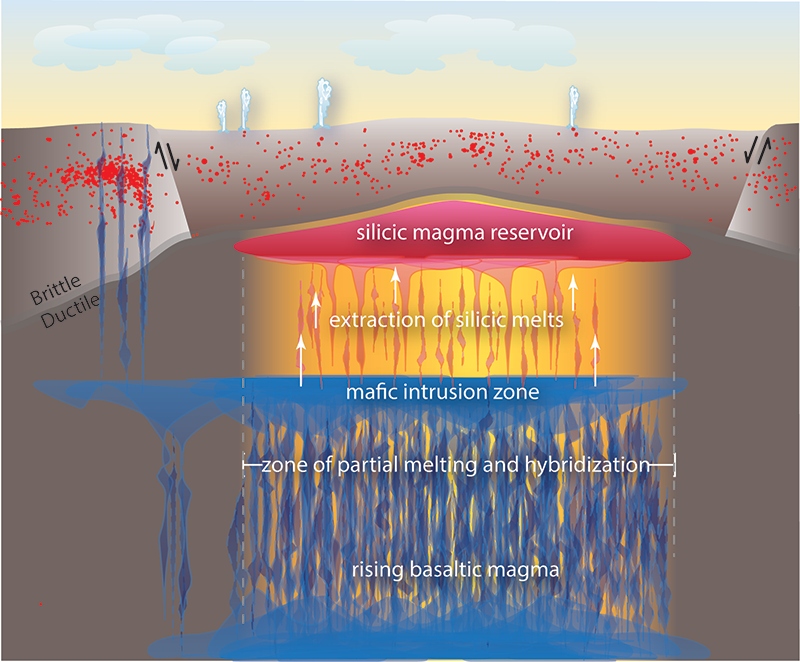
This long article, using Yellowstone as an example, describes current eruption prediction (earthquakes, ground deformation, gas discharge) and suggests better methods involving geophysics, (seismic tomography) and petrology (geospeedometry). And scientific drilling. 

I had never come across the term geospeedometry before and the thought of drilling into a magma chamber gives this retired drilling engineer the willies! So I read the article and it is very interesting. 

Apparently magma drilling "requires cooling the rock in front of the drill bit to quench a narrow cylinder of melt so that it can be further penetrated." What would you use? A liquid which did not vaporise? I will need to research this further.

There is a lot more of interest in the article - well worth reading.

Schematic diagram of the magmatic system beneath Yellowstone caldera (~50 kilometers in diameter). Tomographic studies estimate 5% to 15% melt within the upper silicic magma reservoir. Red dots are earthquake hypocenters. Credit: Modified from Lowenstern and Hurwitz [2008]

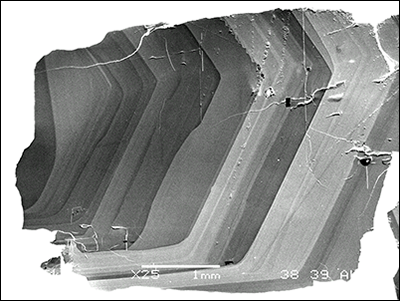
Photomicrograph of sanidine from California’s Inyo Domes illustrating sharp growth zones. These zones track different episodes in the evolution of the magma surrounding these crystals as they grew. Credit: N. Matthews and J. Vazquez, USGS


Tuesday, 31 October 2017

History of dinosaur studies through dinosaur art

Dinosaur Art Through the Ages

This YouTube video gives a very good trot through the history of dinosaur studies using the illustrations produced at the time. An entertaining introduction to a fascinating topic.


You can see it full size HERE

Lava tube skylight

Nice Photo!

This is a photo taken by the USGS in Hawaii in 1996. I like the shapes of the lava above the skylight into the lava tube. The condemned on their way to Hell?

Don't Jump!!!

Monday, 30 October 2017

More about feathered dinosaurs

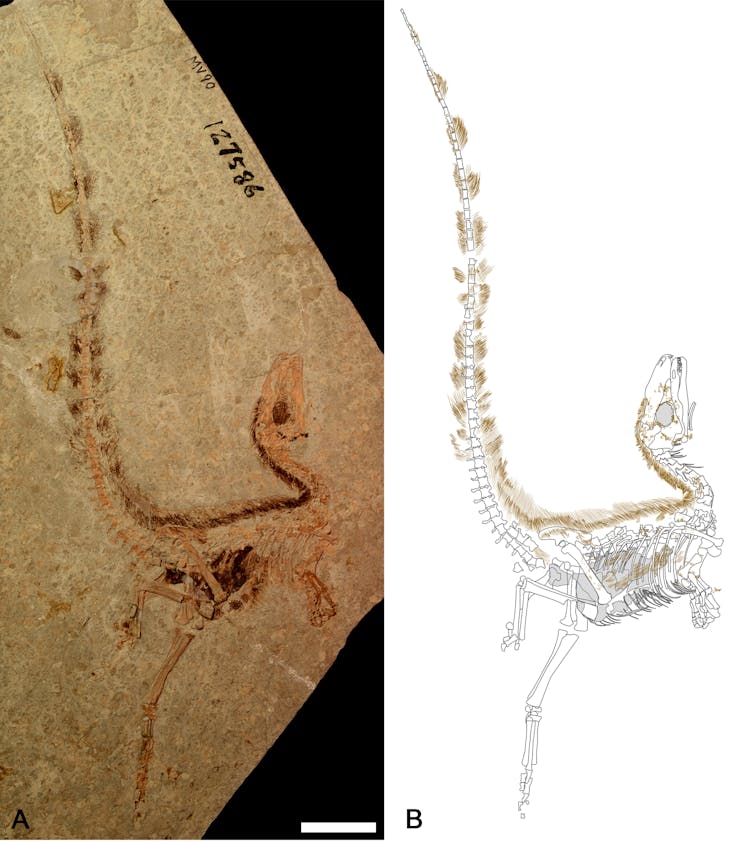
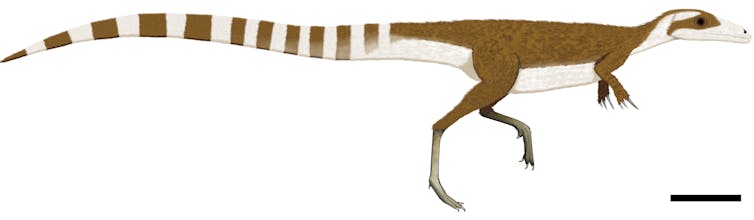
Dinosaurs and Camouflage


This article deals with the colour patterns of a small, feathered, meat-eating dinosaur called Sinosauropteryx from the Early Cretaceous of China. A remarkable amount can be interpreted from the camouflage pattern. And the author is from Bristol - but given the topic, that is no surprise!