Saturday, 29 August 2020

Down to Earth Extra - September 2020


DOWN TO EARTH EXTRA - September 2020


The latest edition of Down to Earth Extra is HERE.

And you can read it below.


Wednesday, 19 August 2020

Zoom Geological Webinars from Cardiff University

 Zoom Geological Webinars from Cardiff University

The School of Earth and Ocean Sciences at Cardiff University is organising a series of Zoom webinars, held at 5PM on Wednesdays.

You can read all about it HERE. Instructions on how to join the webinar are on the site.

I have missed the first couple of seminars but the full list is as follows:- 


Dave Green's Geostudies Programme

 Dave Green's Geostudies Programme

In these uncertain coronavirus times, Dave Green has boldly gone and put together a programme for the rest of this year and next. Let us hope it can go ahead as planned! Dave can be contacted HERE.


Dave writes:-

Saturday, 15 August 2020

Landslides and the Railways

Landslides and the Railways 

There has been much on the airwaves and in the papers about the dangers climate change induced landslides pose for the railways. A correspondent sent me THIS which shows that the same concerns have worried people in the railway industry, over the years. 

The paper covers the methods used to determine where conditions are suitable for landslides to occur. It does not present its results in sufficient detail to see whether the place where the recent derailment near Stonehaven was classed in its hierarchy of landslide possibilities. That was not its purpose.

But Network Rail and the BGS do have that information. This will show whether the area was a risk. But it will not tell you that a landslide will occur on a particular day. I suspect that predicting landslides is similar to predicting earthquakes!


Tuesday, 11 August 2020

Ocean-going Crinoids

Ocean-going Crinoids 

Those well known fossils, crinoids, are often found attached to, what are now, small pieces of coal. Originally these were pieces of driftwood.
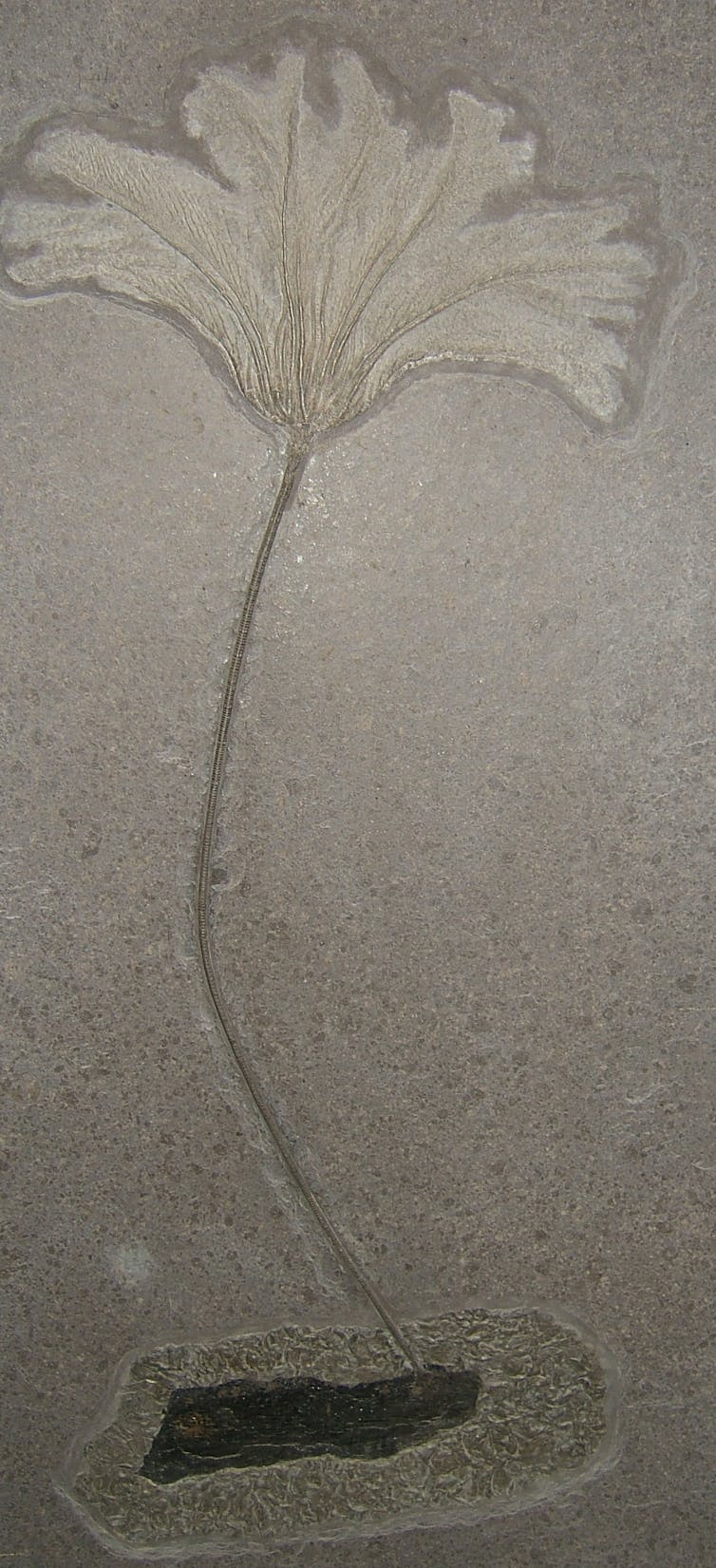
Fossil crinoid attached to coal

William Buckland (and very possibly, Mary Anning) suggested that the crinoids had been attached to pieces of driftwood while alive, living suspended underneath it. For many years this was thought to be an impossibility - the weight of the crinoids would have caused the driftwood logs to sink.

But the author of THIS ARTICLE, and his co-workers, using many different sorts of advanced techniques, has worked out that crinoids do indeed hang suspended underneath the driftwood but clustered towards one end of it. Such a log could drift for ten to twenty years.

So now we know! The original article is HERE
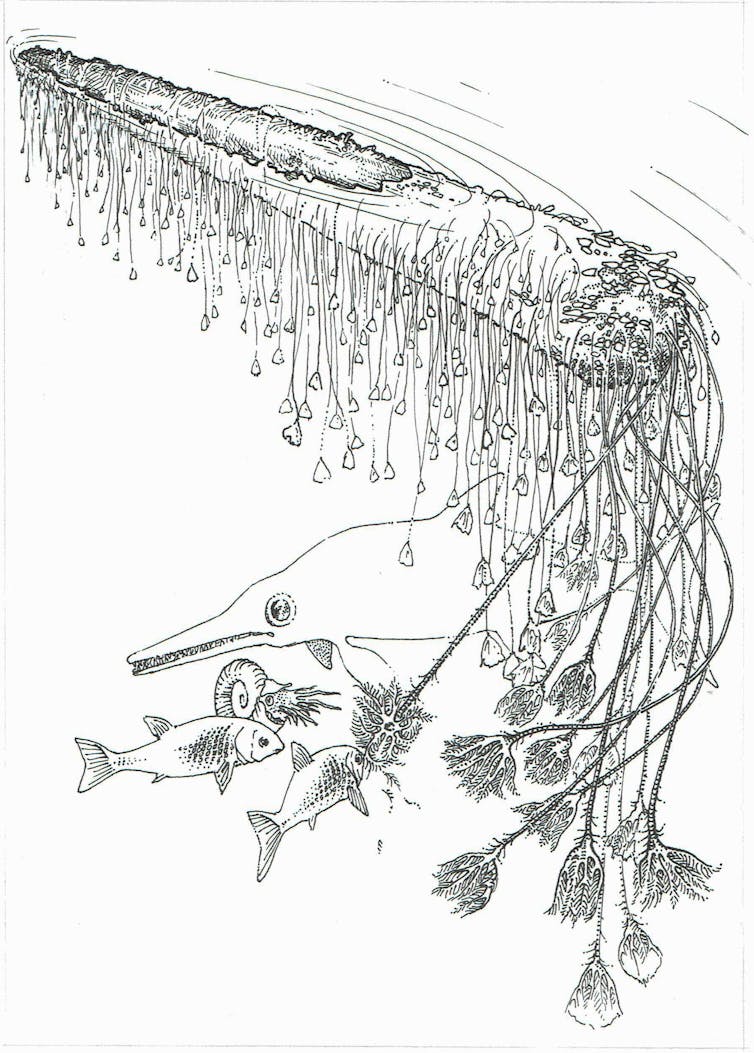
Artists impression of a crinoid raft.

Friday, 7 August 2020

What was Tanystropheus?

What was Tanystropheus? 

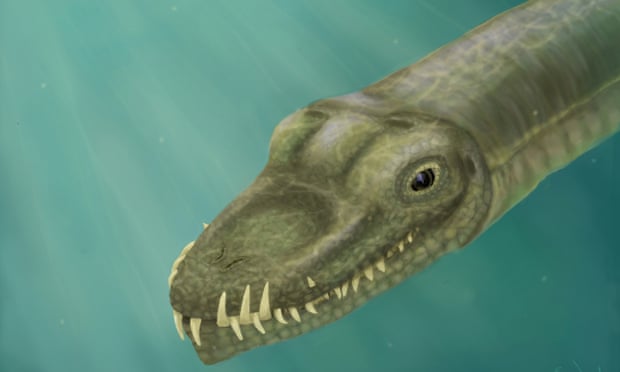
A correspondent has brought THIS ARTICLE to my attention. And the answer, according to the researchers, is an aquatic creature. And not one I would like to meet in a non-fossilised form - it was active 242m years ago. It was up to 6 metres long, with a long stiff neck. Fortunately its head, and teeth were small.

The researchers conclude that there were two species of Tanystropheus - the larger hydroides and the smaller longobardicus. The newspaper article is based on THIS ARTICLE which has all the details.

An artist’s impression of Tanystropheus, fossils of which were first found around 150 years ago. Photograph: Emma Finley-Jacob/University of Zurich/Current Biology

Thursday, 6 August 2020

Geology from your Sofa

Geology from your Sofa

In this time of enforced isolation the Geologists' Association, (the GA) has produced the "Geology from your Sofa" web page. You can find it HERE. There is a tremendous amount of stuff to read and look at.

Well worth clicking on!