Saturday, 23 October 2021

Were Dinosaurs Good Neighbours?

Were Dinosaurs Good Neighbours? 

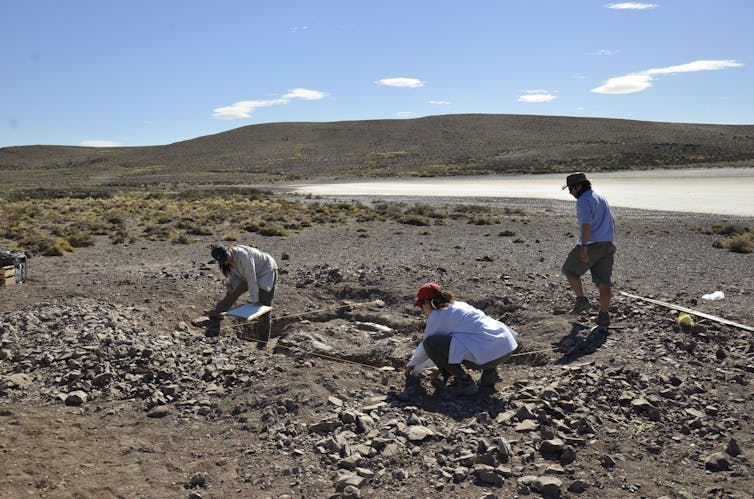
A correspondent has sent me THIS LINK - many thanks. In it Mike Benton discusses whether dinosaurs were social animals. The basis of his discussion is THIS PAPER. the researchers have found and described a site in Patagonia where they found nests with eggs and the skeletons of Mussaurus patagonicus. The skeletons ranged from babies to adults. The age is given as 193 million years.

The nests were spaced at a distance consistent with the animals size - close but not too close. It is suggested that they returned to the site regularly. There is evidence that it is a life assemblage - at least for the eggs - perhaps a dust storm buried the eggs. The skeletons are mostly complete and therefore are at the place they died.

So did these dinosaurs live in family groups? Mike Benton is beginning to think so - dinosaurs were warm-blooded, feathered, fast-moving and had sophisticated behaviour.


The research team studied fossils at an early Jurassic site in Patagonia, Argentina. Alejandro OTero

Thursday, 14 October 2021

Two Contrasting Landslides

Two Contrasting Landslides 

I came across these two articles on The Landslide Blog

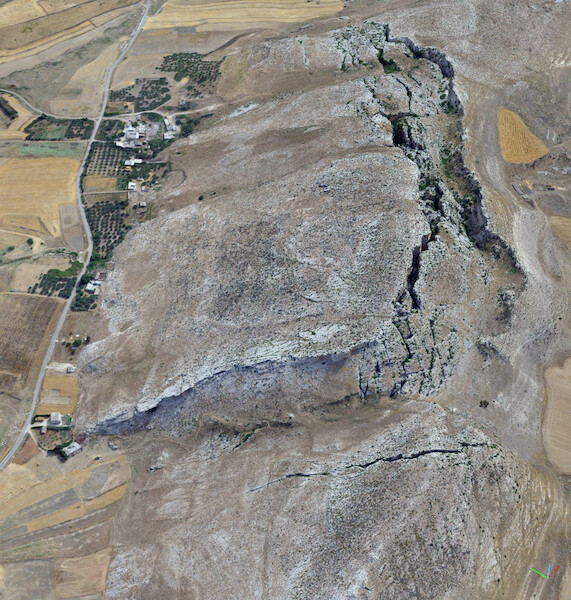
THE FIRST is probably the slowest landslide measured - 2mm per year. It is big - a block of limestone 900m by 400m sliding over a layer of clays and marls. It is in Tunisia and it looks spectacular. Obviously a still photograph rather than a video.


THE SECOND is rather faster. It occurred in the Dolomites on the 9th October at the Punta dei Ross, Croda Marcora.


It becomes rather hectic at the 38 second mark. The measurements become m per sec rather than mm per year.

Both landslides are fascinating.

Saturday, 9 October 2021

The Moon's Youngest Rocks

 The Moon's Youngest Rocks

A Chinese Moon lander has come back with the youngest rocks yet found on the Moon. 1.97 billion year old basalt lavas, to be precise. This age is a lot younger than anyone had predicted. Where did the heat come from to produce liquid magma? Tidal heating is today's hot prediction, but nobody really knows. 

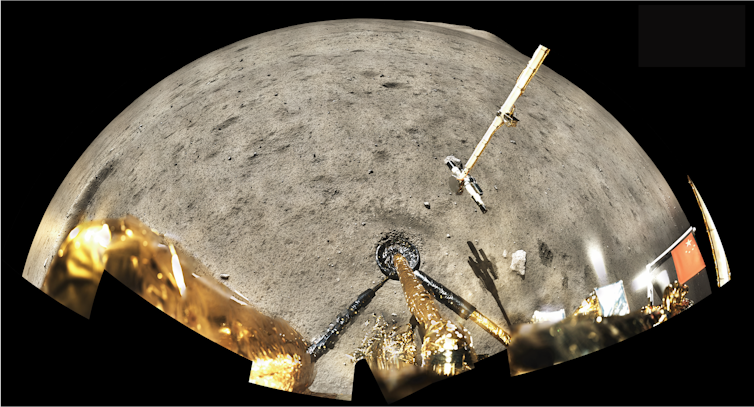
The rocks were retrieved by the Chang'e-5 mission which landed on the moon in December 2020. Read all about it HERE

The site for the lander was selected by counting craters! The less the crater density, the younger the surface. The age found vindicates this method of dating the relative ages of areas of the Moons surface.

Explaining the age of the lava should keep people busy for ages!


The landing site. CNSA Lunar Exploration and Space Engineering Center, Author

Thursday, 7 October 2021

Earthshine Decreasing

Earthshine Decreasing 

The reason we are able to see a new Moon is because it is lit by reflected light from the Earth - earthshine. The amount of earthshine is controlled by the Earth's albedo - the higher the albedo the more earthshine. In the last ice age the albedo was high as ice is a good reflector. Cloud cover acts in the same way. 

The source of the light is, of course, the Sun. And with light comes heat. Generally 30% of the solar energy hitting the Earth is reflected - the albedo at work.

How do you measure the albedo? THIS ARTICLE based on THIS PAPER tells you how and it is based on measuring earthshine. (Jokes about moonshine will not be tolerated!) The investigators have been measuring earthshine on the moon since 1998 and have found that it has decreased by an amount indicating a 0.5% decrease in the albedo. A decrease in the energy reflected out indicates an increase in the energy received by the Earth.

In the ice ages high albedo encouraged cooling; now the decreasing albedo is increasing global warming.

Surprisingly the change in the albedo is attributed to a shortage of low altitude clouds over the eastern Pacific.

Wednesday, 22 September 2021

Down to Earth Extra - October 2021

  Down to Earth Extra - October 2021 
 
The latest edition of Down to Earth Extra is HERE.

And you can read it below.


Tuesday, 21 September 2021

Apocalypse Then

Apocalypse Then 

I came across THIS ARTICLE today and thought it very interesting if not particularly geological. It is a popularisation of THIS PAPER in Nature.

It concerns the total destruction of Tall el-Hammam, a Middle Bronze Age city north east of the Dead Sea, in Jordan. This occurred about 3,600 years ago and it is speculated that it may have inspired the Old Testament story of the annihilation of Sodom. There is a Lot of evidence. (Sorry!)

The site has been excavated for 15 years and is continuing. Objects found which are of interest include, pottery sherds with glassy surfaces, melted mudbrick fragments, melted building plaster. One begins to think of an extremely high temperature event.

Also the buildings did not just fall down - they were levelled. Walls were sheared off. Most of the mud bricks were pulverised and blown off the site to the north east.

Could this be signs of warfare - No. There is a complete lack of arrowheads, sling stones and spear points at the destruction layer.

The researchers did not find nanodiamonds (often found at sites of cosmic impact) but they did find diamonoid particles - the smallest unit found in the diamond crystal lattice. Shocked quartz was also found.

There is much more evidence described in the articles and they all lead to the conclusion that there was a cosmic airburst a bit bigger than the Tunguska event in Siberia in 1908.

Both articles are well worth reading. And both are free!

The comments on the first article are enlightening and entertaining. The suggestion that the Sumerians had atomic bombs but not wheels is dismissed.


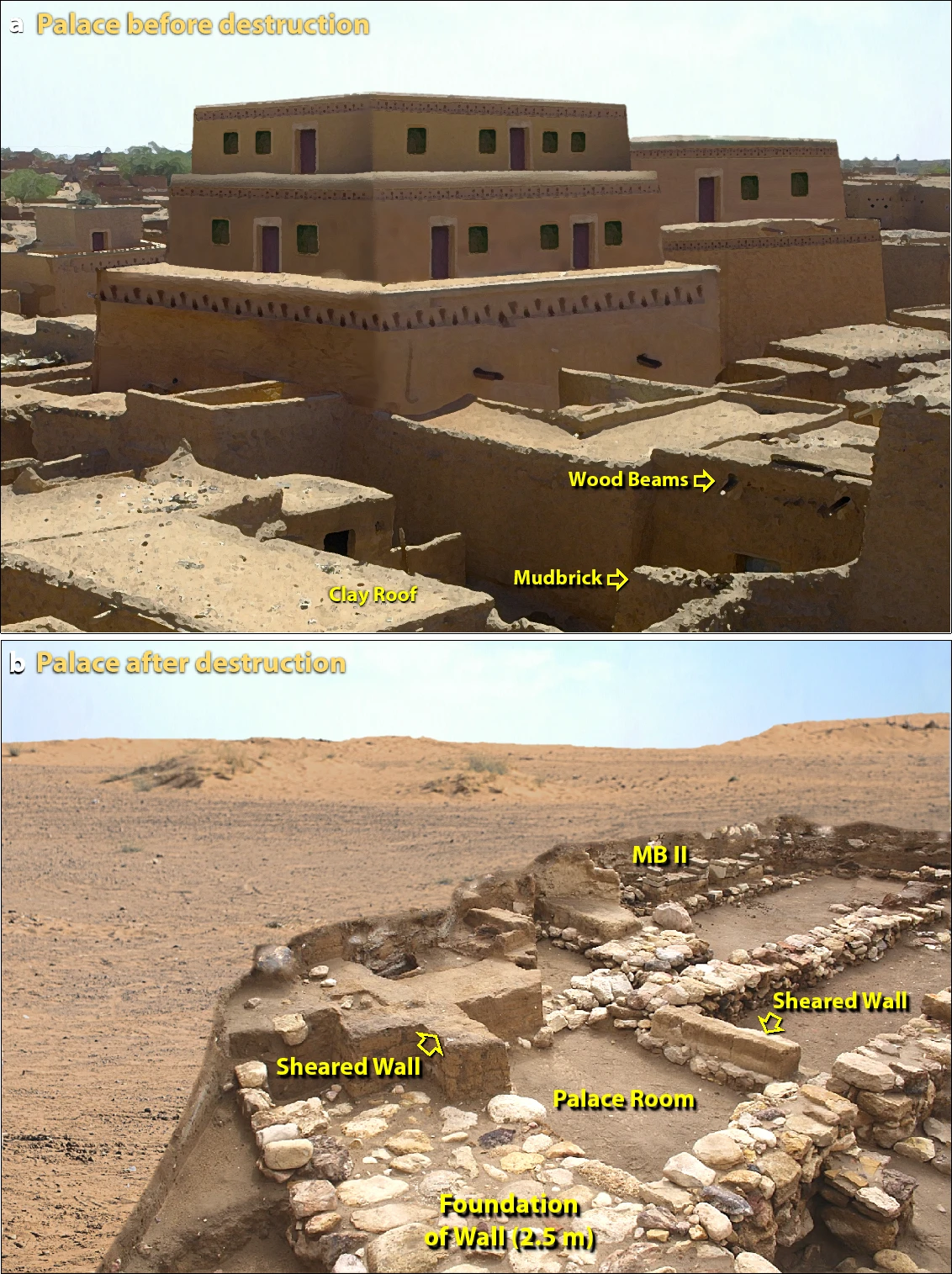
Catastrophic leveling of the palace at TeH. (a) Artist’s evidence-based reconstruction of the 4-to-5-story palace that was ~ 52 m long and 27 m wide before its destruction. (b) Artist’s evidence-based reconstruction of palace site on upper tall, along with modern excavation. “MB II” marks the top of 1650-BCE Middle Bronze rubble. Note that the field around the excavation is essentially flat, unlike the view in panel ‘a’. Originally, parts of the 4-story palace were ~ 12 + m tall, but afterward, only a few courses of mudbricks remain on stone foundations, labeled as “wall remnants”. Part of the foundation of the massive wall around the palace is at the bottom. Debris from between sheared walls has been removed by excavation. A comparison of panel ‘a’ to panel ‘b’ shows that millions of mudbricks from the upper parts of the palace and other buildings are missing.

Saturday, 18 September 2021

Meet the Magma Tree

Meet the Magma Tree 

Two correspondents have brought THIS ARTICLE to my attention - many thanks and keep them coming! The article is based on AN ARTICLE (£) in Nature Geoscience. (The pound sign indicates that you need to pay to read it.)

The article describes research which has been going on for decades. Using seismometers to determine the inner structure of the earth is now developing to describe the plumes which bring volcanism to the unexpected parts of the globe. And now researchers think they have found "a titanic mantle plume "tree"" which rises from core mantle boundary.

One of the branches of the tree hits the surface at the Indian Ocean island of La Réunion. It has an extremely active volcano but is more than 1,000km from the nearest plate boundary. It is the current end of a track which leads to the Deccan Traps of India which produced 10⁶km³ of basalt around 65 million years ago.

Much effort has been expended in mapping the Réunion plume and the other plumes of the magma tree and the articles describe how they look as they do. And also does some predictions into the future - Africa seems to have a fiery future!

There is far too much to describe here - read the article!


The caldera of the Piton de la Fournaise on Réunion.
Henner Damke/Shutterstock